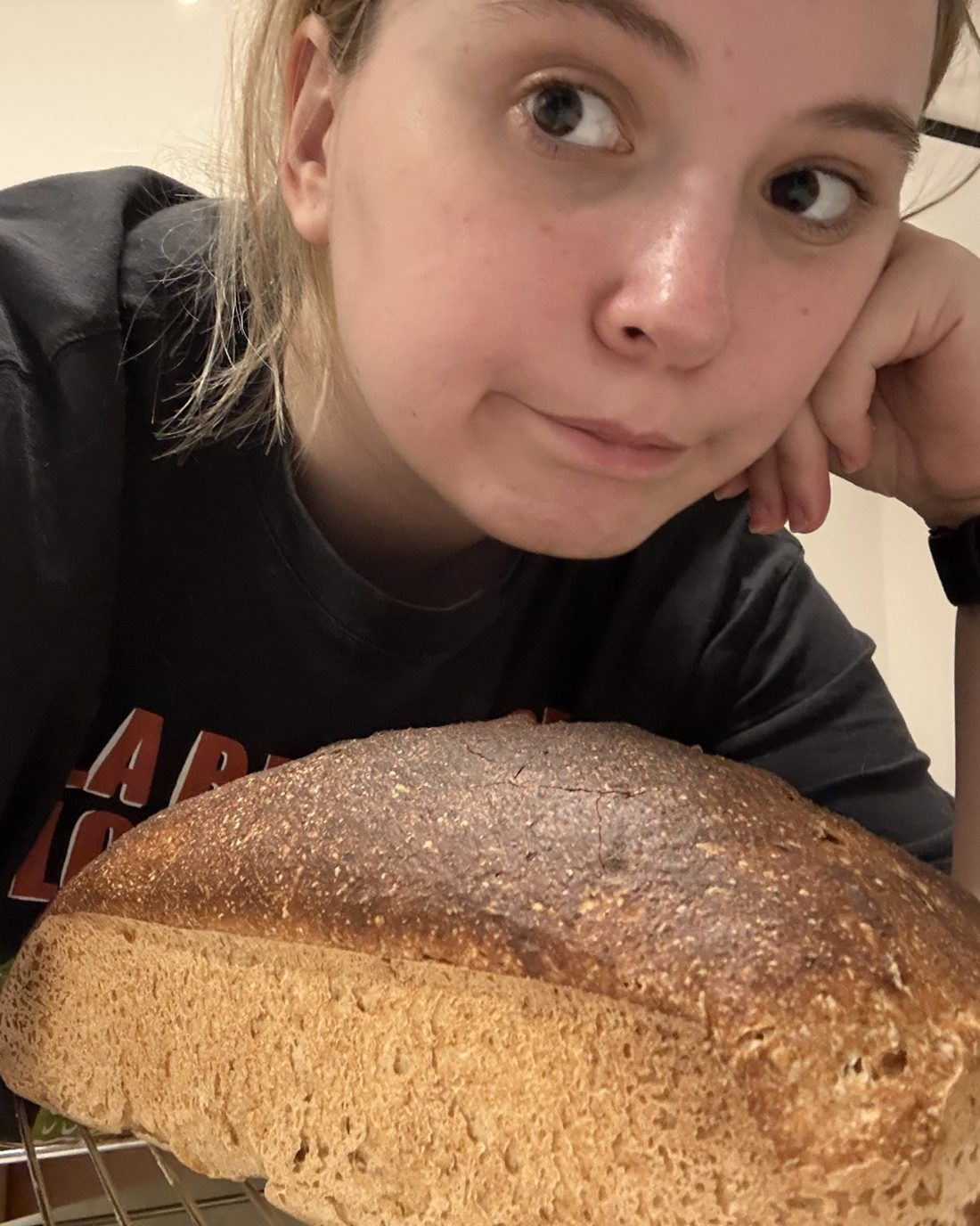
Bread on rye starter that bakes in a tin and needs no talent for shaping. About 20 minutes of your hands in total — the rest of the time the dough works on its own. Rye is not about gluten. Rye is about patience.
what you need
No banneton, no dutch oven, no shaping. The tin does the shaping for you. Wet hands do the rest.
what goes in
| ingredient | small loaf 600 g | big loaf 1150 g |
|---|---|---|
| rye starter · 100% | 136 g | 260 g |
| rye flour | 51 g | 98 g |
| whole wheat flour | 51 g | 97 g |
| white bread flour | 169 g | 325 g |
| water | 186 g | 357 g |
| salt | 7 g | 13 g |
| tin, about | 20×10 cm | 26–28×11 cm |
Inside the starter: 68 g rye flour + 68 g water (600 g loaf), 130 g + 130 g (1150 g loaf). All the flour together is 339 / 650 g, all the water 254 / 487 g. The starter is 40% of all the flour, and its flour and water are already counted in the 75%.
I baked the big one: 1150 g of dough. Take a roomy tin — rye grows up, not sideways, and it needs space to do it.
This bread can be made in any tin, but it shows itself best in a metal one: it won't let the dough spread and lose volume.
what is this?
A calculator that rewrites this recipe for you. Pick the version — same day (40% starter), overnight (20%) or more sour (70%) — then type in the flour you have or the dough you want, and it tells you how many grams of everything to weigh.
All weights are dough. In the oven a loaf loses some water: 1150 g of dough → about 1000 g of bread. The starter is rye, 100%: feed it separately, its flour and water are already counted.
how much do you have?
Starter: rye, 100% (equal rye flour and water). The rye inside it is already counted in the recipe.
20 minutes of you. ~6 hours of bread.
Mixing, salt, one fold, a log into the tin. Then you go live your life while the dough rises, and come back to bake. The reel shows every step; below, each step has its own video and the details.
- aHands-on: mixing, salt, the fold, the shaping, scoring — about 20 min.
- bWaiting: 40 + 30 min of rest, 3–4 h of proofing, about 40 min in the oven.
- cAnd then the hardest part: 6–8 h of cooling before you cut it.
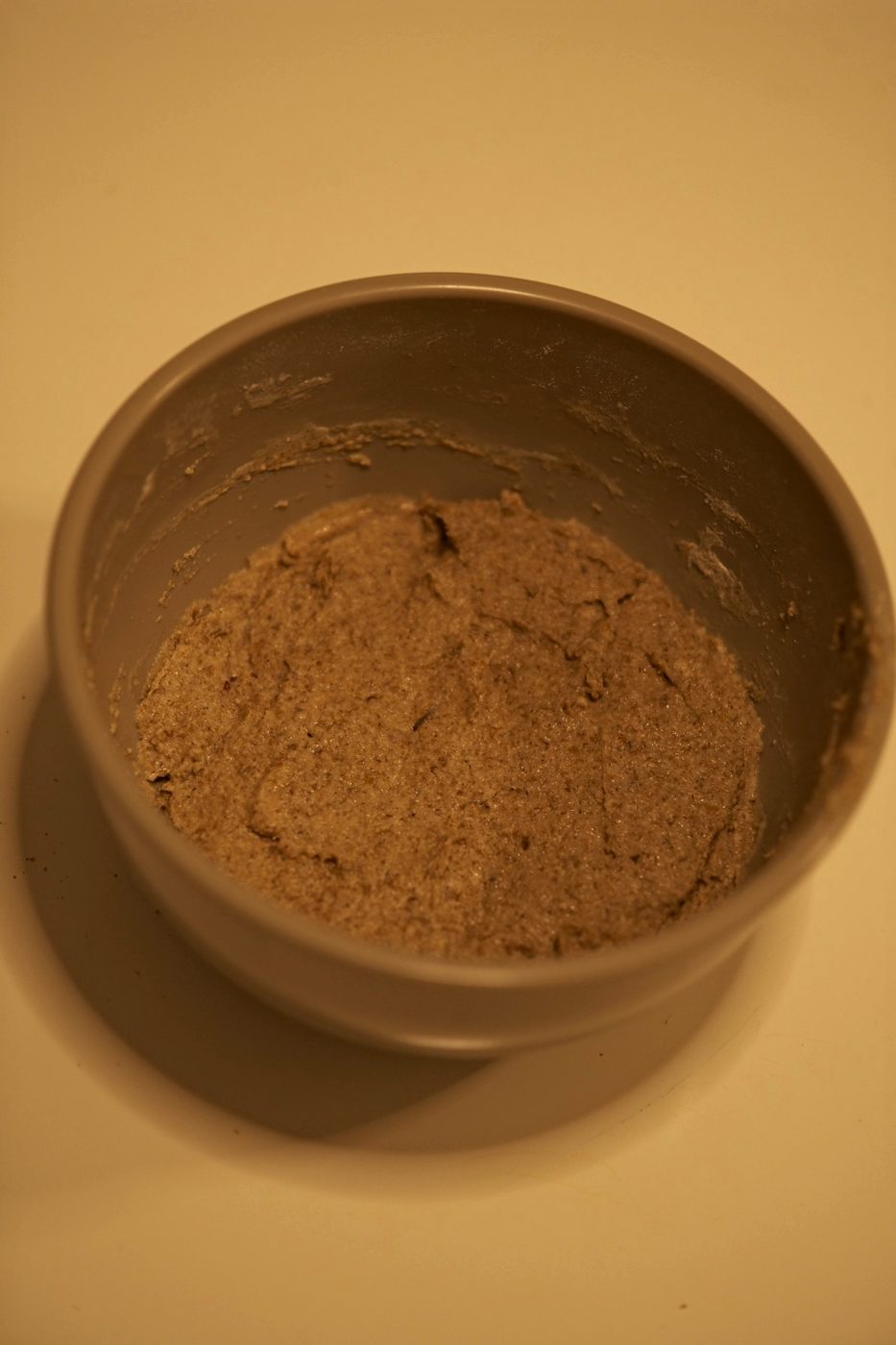
- aFeed the starter 4–6 h before. It's ready when it has about doubled, the dome is just starting to sink, and it smells sour and fruity, not like vinegar.
- bWater + starter, then all the flour: rye, whole wheat, white.
- cMix until there are no dry lumps left. That's it — no kneading yet.
- dCover and leave for 40 min.
no dry flour — and walk away
- aSalt in. Knead it in with a wet hand until you can't feel the grains.
- bThe dough is sticky — that's rye, it's meant to be. Wet hands, not more flour.
- cOne fold: stretch one side up and fold it over, turn the bowl, repeat on all four sides.
- dCover and leave for 30 min.
sticky? good. wet your hands
- aGrease the tin with oil or line it with parchment.
- bWet hands: roll the dough into a log and put it in seam down.
- cSmooth the top with a wet palm.
- dThe dough should fill about 2/3 of the tin. More than that — take a bigger tin, or the loaf will spill over.
this is all the shaping there is
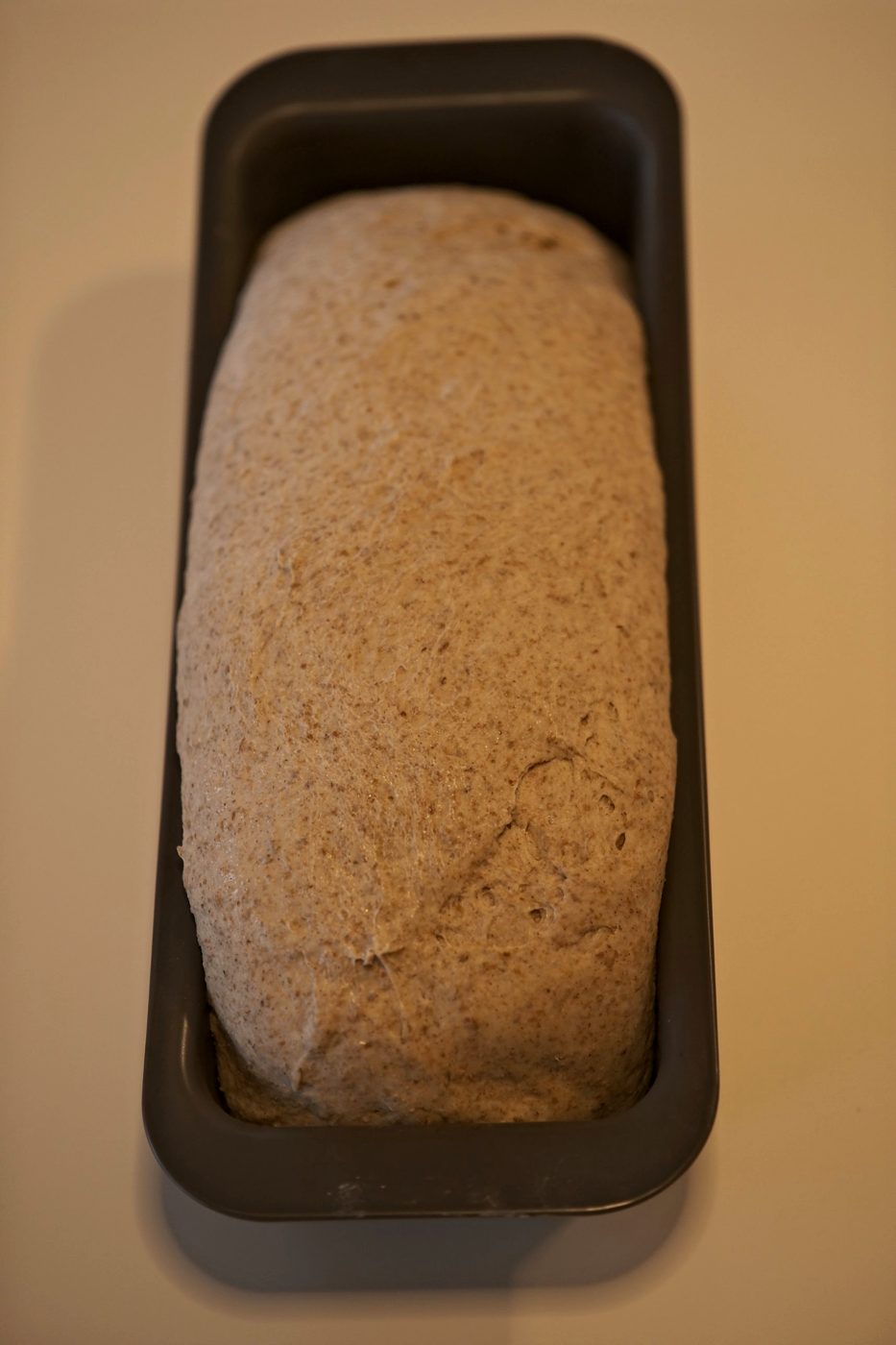
- aCover the tin and leave it at room temperature for 3–4 h.
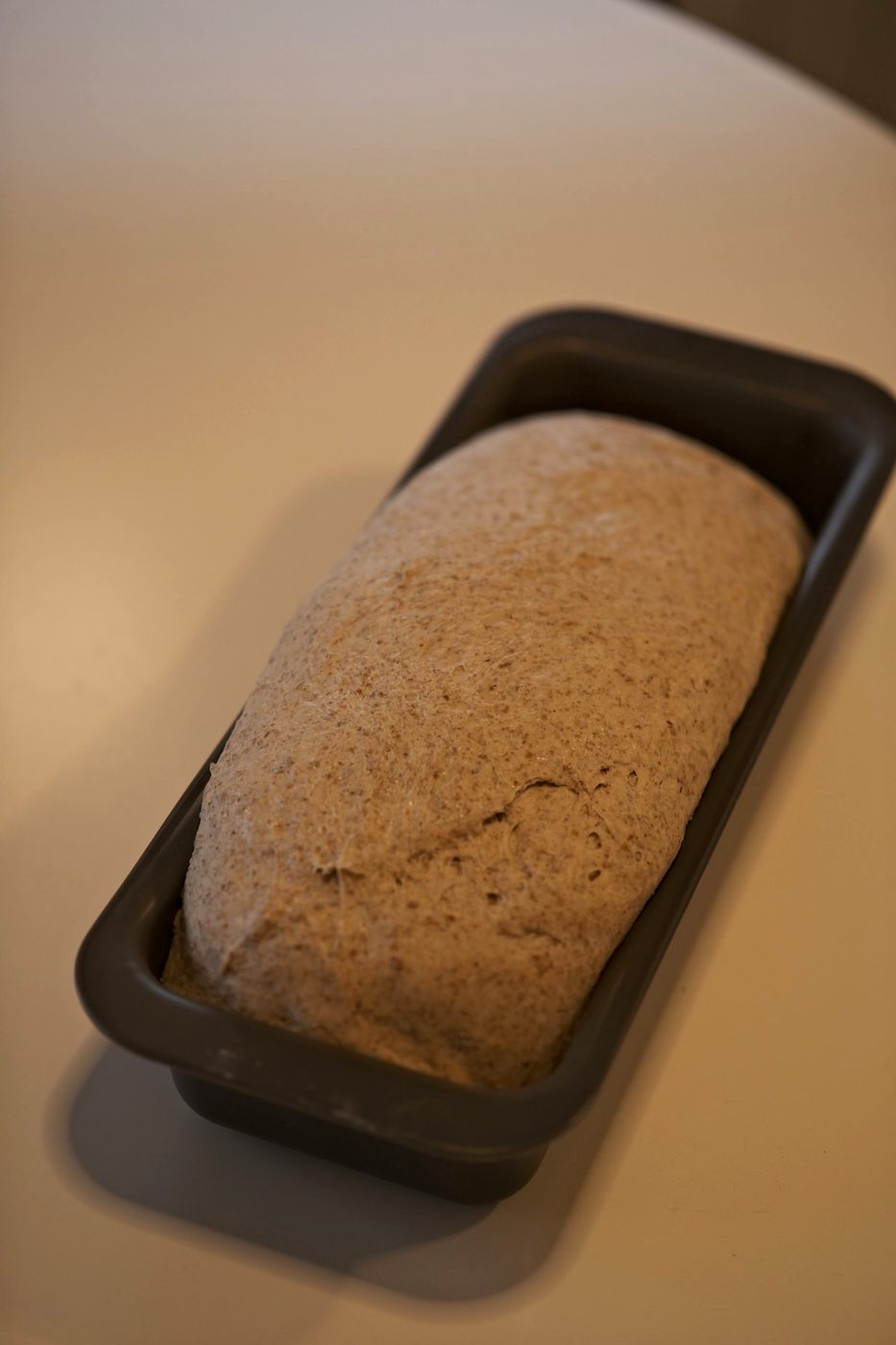
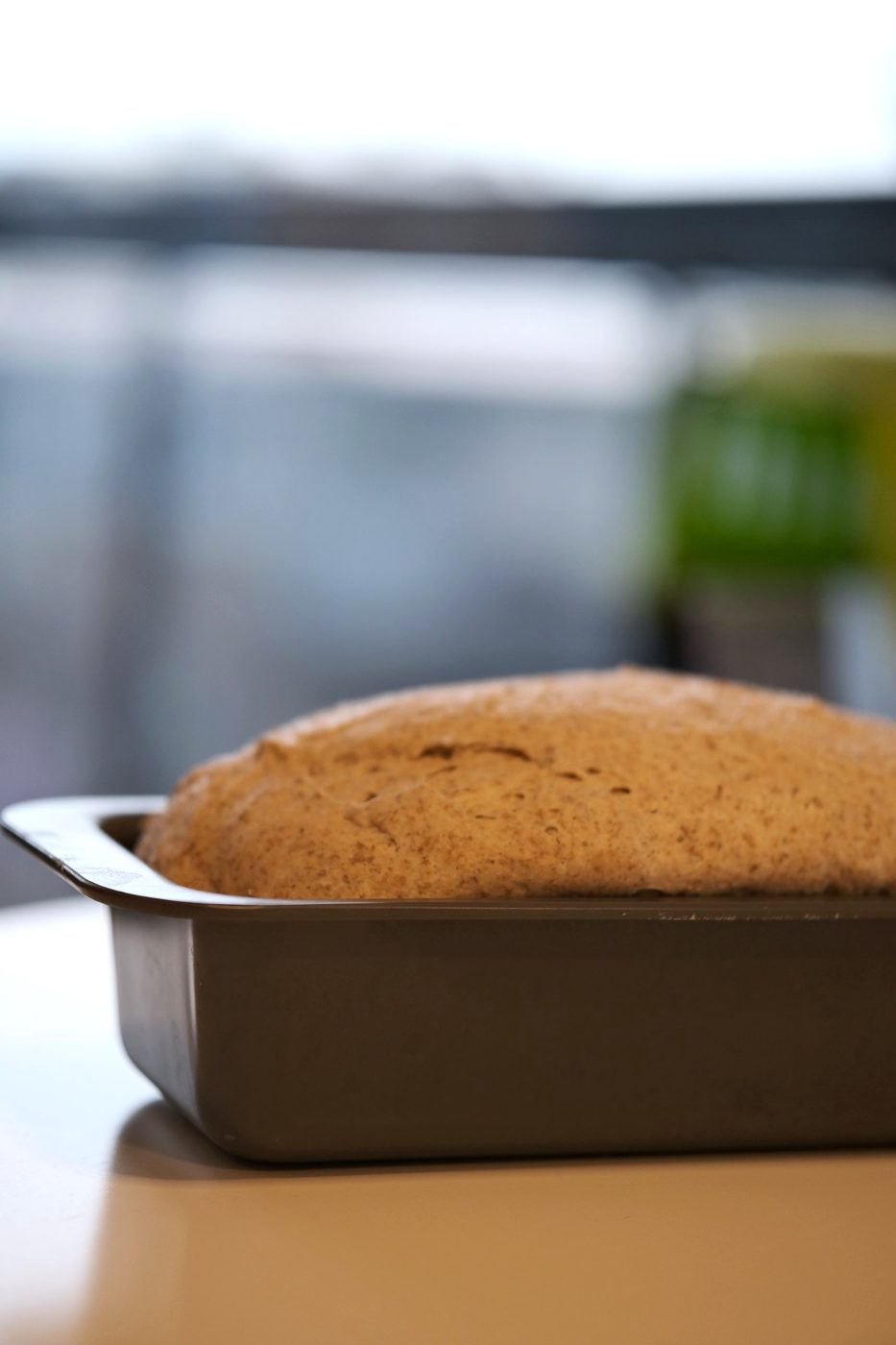
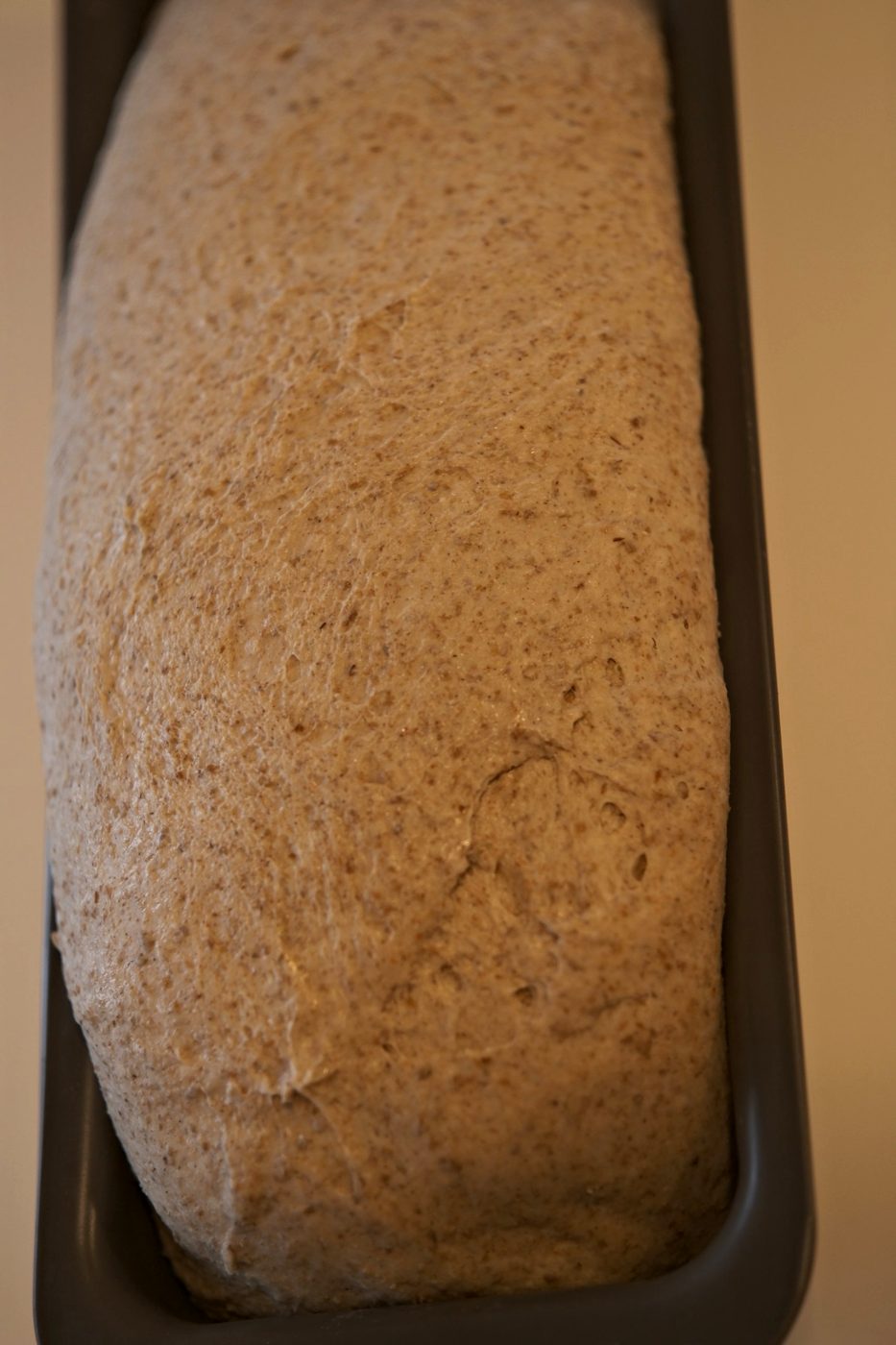
- bIt's ready when the dough has rounded into a dome, almost up to the rim, with small bubbles on top.
- cWatch the dough, not the clock: in a warm kitchen it's faster, in a cool one slower.
- dWhen it's nearly there, heat the oven to 250 °C with a tray at the bottom for steam.
domed and nearly at the rim — time to heat the oven
- aOne score along the loaf, not deep.
- bInto the oven at 250 °C, with steam from the tray at the bottom, for 15 min.
- cAt 15 min take the steam out, turn the oven down to 220 °C and bake another 20–25 min.
- dIt's done at 96–98 °C inside, or when the bottom sounds hollow. Want crust all around? Take it out of the tin for the last 5–10 min.
a dark crust on rye is flavour, not a mistake
- aOut of the tin and onto a rack straight away.
- bCool for at least 6–8 h, overnight is even better. The rye crumb keeps setting after the oven.
- cCut it hot and it's gummy — and it's not the starter's fault, it's impatience.
the hardest step in the whole recipe
- aFeed the starter 4–6 h before → mix everything, rest 40 min
- bSalt, knead it in → one fold → rest 30 min
- cA log into the tin, seam down → proof 3–4 h at room temperature until domed
- dBake 250 °C with steam 15 min + 220 °C without steam 20–25 min → cool 6–8 h
want to bake in the morning?
My bread was baked without an overnight proof, but you can change the recipe and use only 20% starter of the flour (the grams are on the right). In that case, after the shaping step, send the dough to proof in the fridge overnight. In the morning, if the dough still needs volume, take it out into the kitchen while the oven heats up. If the dough has risen in the fridge on its own, bake it straight from the cold!
- aSteps 1–3 stay the same: mix, rest, salt, one fold, a log into the tin.
- bCover the tin and put it in the fridge overnight.
- cMorning: risen to a dome — bake straight from the fridge. Not yet — let it finish in the kitchen while the oven heats.
| ingredient | 600 g | 1150 g |
|---|---|---|
| rye starter · 100% | 68 g | 130 g |
| rye flour | 85 g | 163 g |
| whole wheat flour | 51 g | 97 g |
| white bread flour | 169 g | 325 g |
| water | 220 g | 422 g |
| salt | 7 g | 13 g |
Inside the starter: 34 g rye flour + 34 g water (600 g loaf), 65 g + 65 g (1150 g loaf). All the flour and water stay the same: 339 / 650 g and 254 / 487 g, 75% hydration. Less starter means slower fermentation and a wider window — handy for a night in the fridge, and the bread is a little milder.
more sour, more rye
Starter at 70% instead of 40% — all the rye flour goes through the starter, and you don't add separate rye to the dough. The bread will be more sour and denser, and fermentation will run faster: watch the dough, not the clock.
| ingredient | 600 g | 1150 g |
|---|---|---|
| rye starter · 100% | 238 g | 456 g |
| whole wheat flour | 51 g | 97 g |
| white bread flour | 169 g | 325 g |
| water | 135 g | 259 g |
| salt | 7 g | 13 g |
| problem | possible cause |
|---|---|
| Gummy, sticky crumb | Cut too early, or underbaked — check 96–98 °C inside |
| The top sank or went flat | Overproofed — bake earlier next time |
| Dense crumb, torn sides | Underproofed — wait for the dome |
| Spilled over the tin | Tin too small for the dough |
| Too sour | Starter too ripe, or the proof ran long in a warm kitchen |
- aA slice of about 40 g is around 90 kcal. The whole loaf is about 2300 kcal · protein 73 g · fat 12 g · carbs 478 g.
- bOnly the flour counts: 228 g rye (98 g in the dough + 130 g inside the starter), 97 g whole wheat and 325 g white. Water and salt have no calories.
- cEstimate for a loaf of about 1000 g after baking (1150 g of dough). Weigh yours and divide the whole-loaf numbers by its weight for an exact figure.
- dCarbs include about 4.5 g of fibre — rye brings most of it. Salt: about 1.3 g per 100 g.
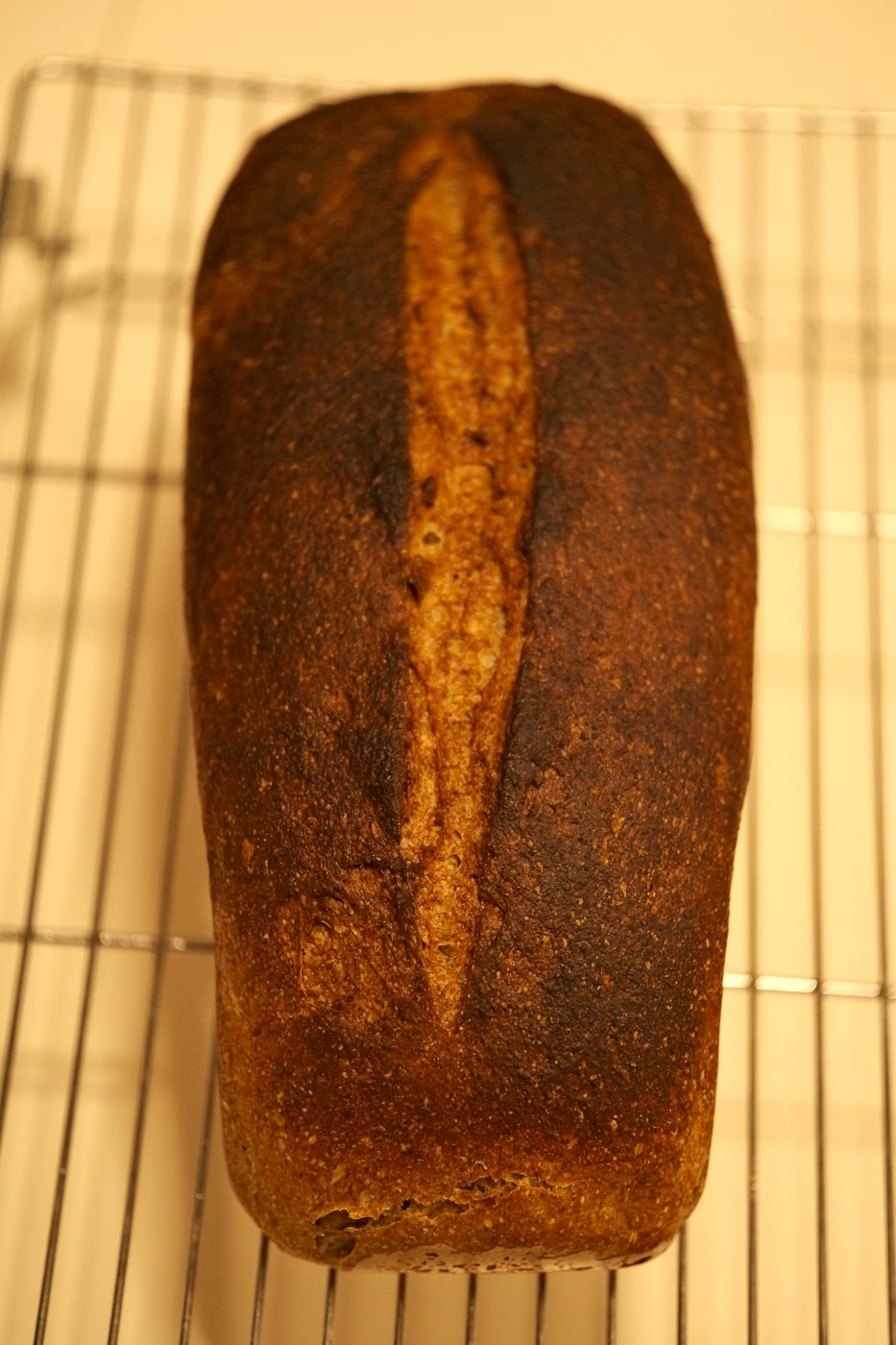
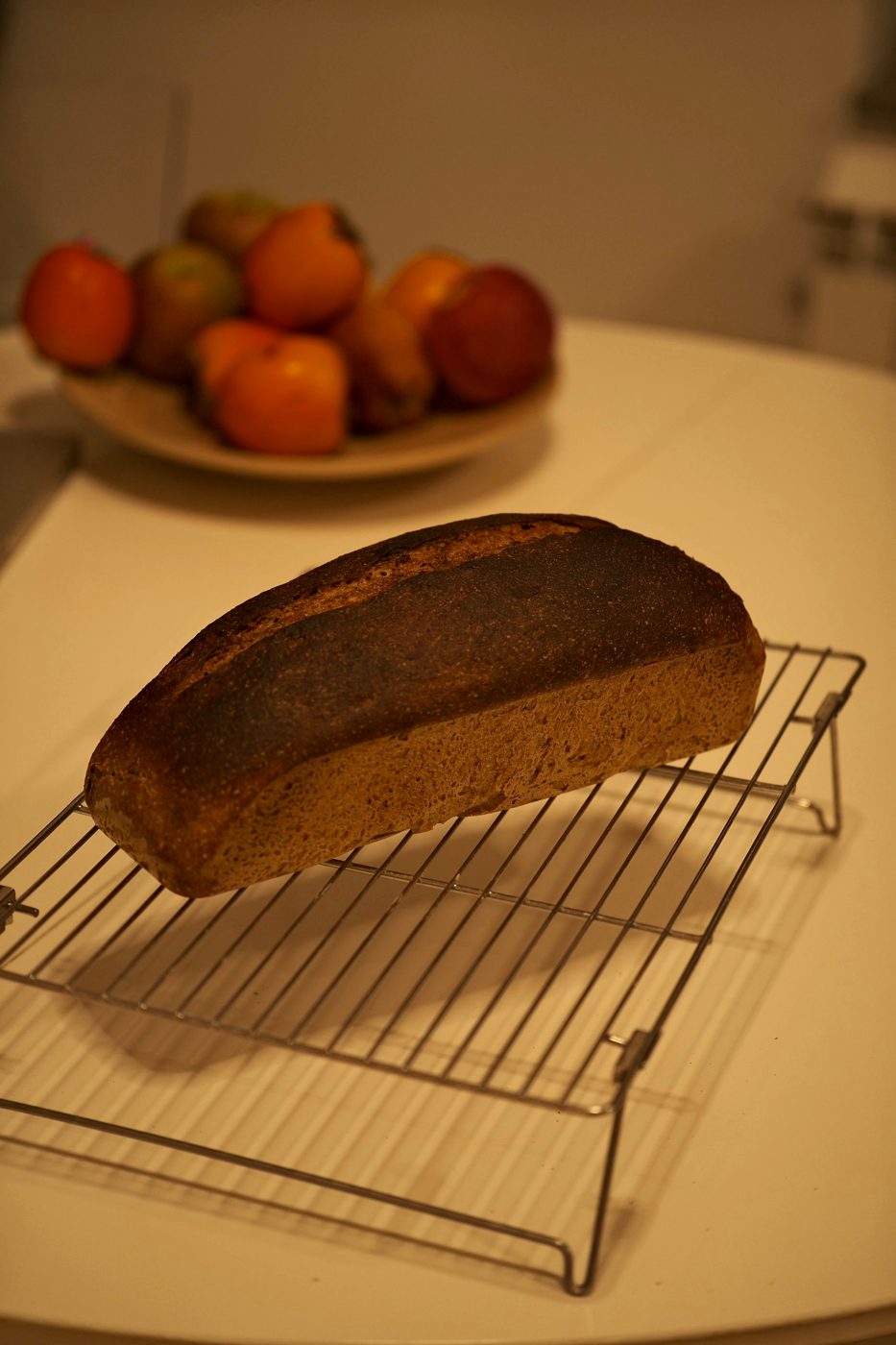
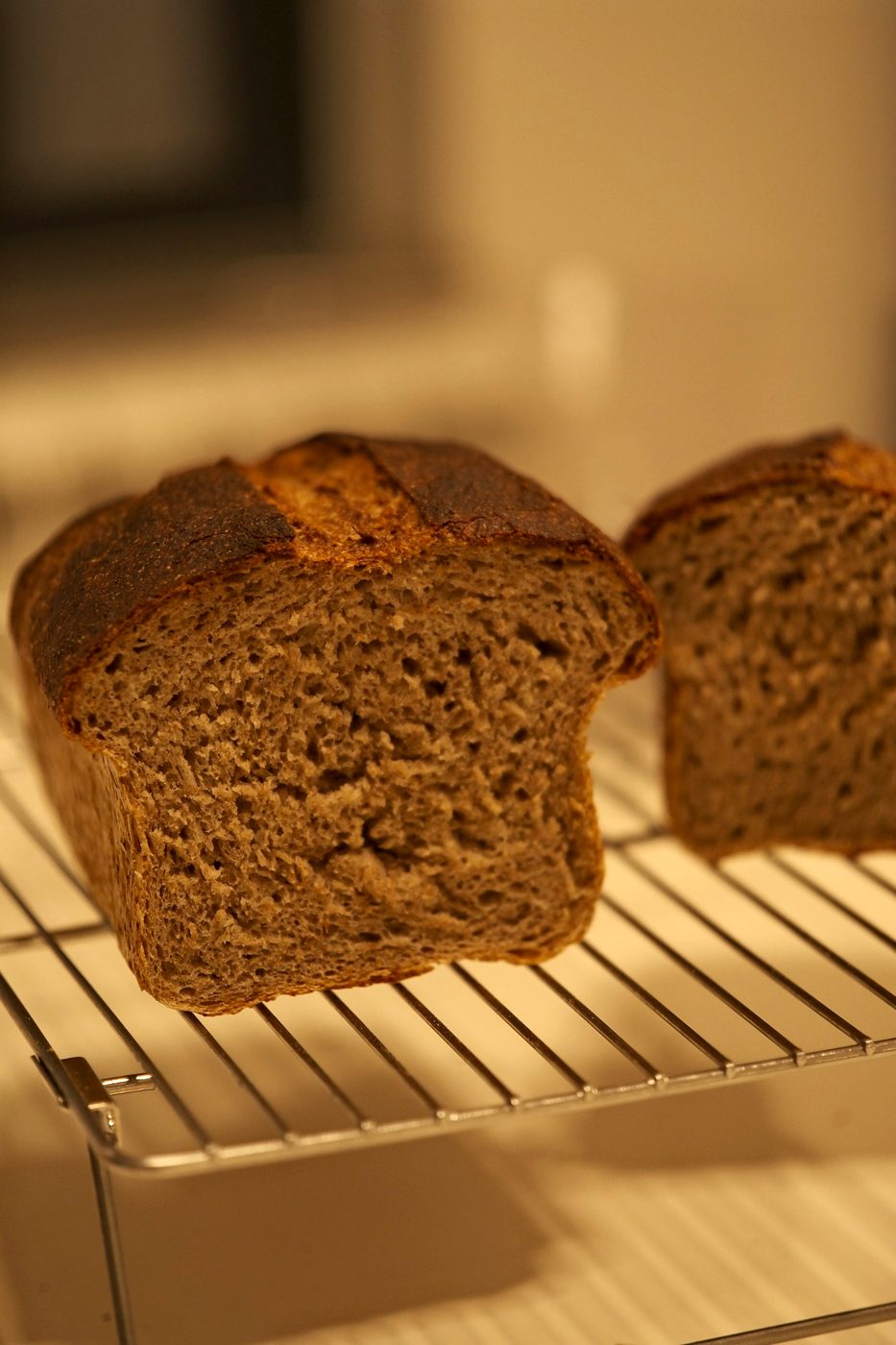
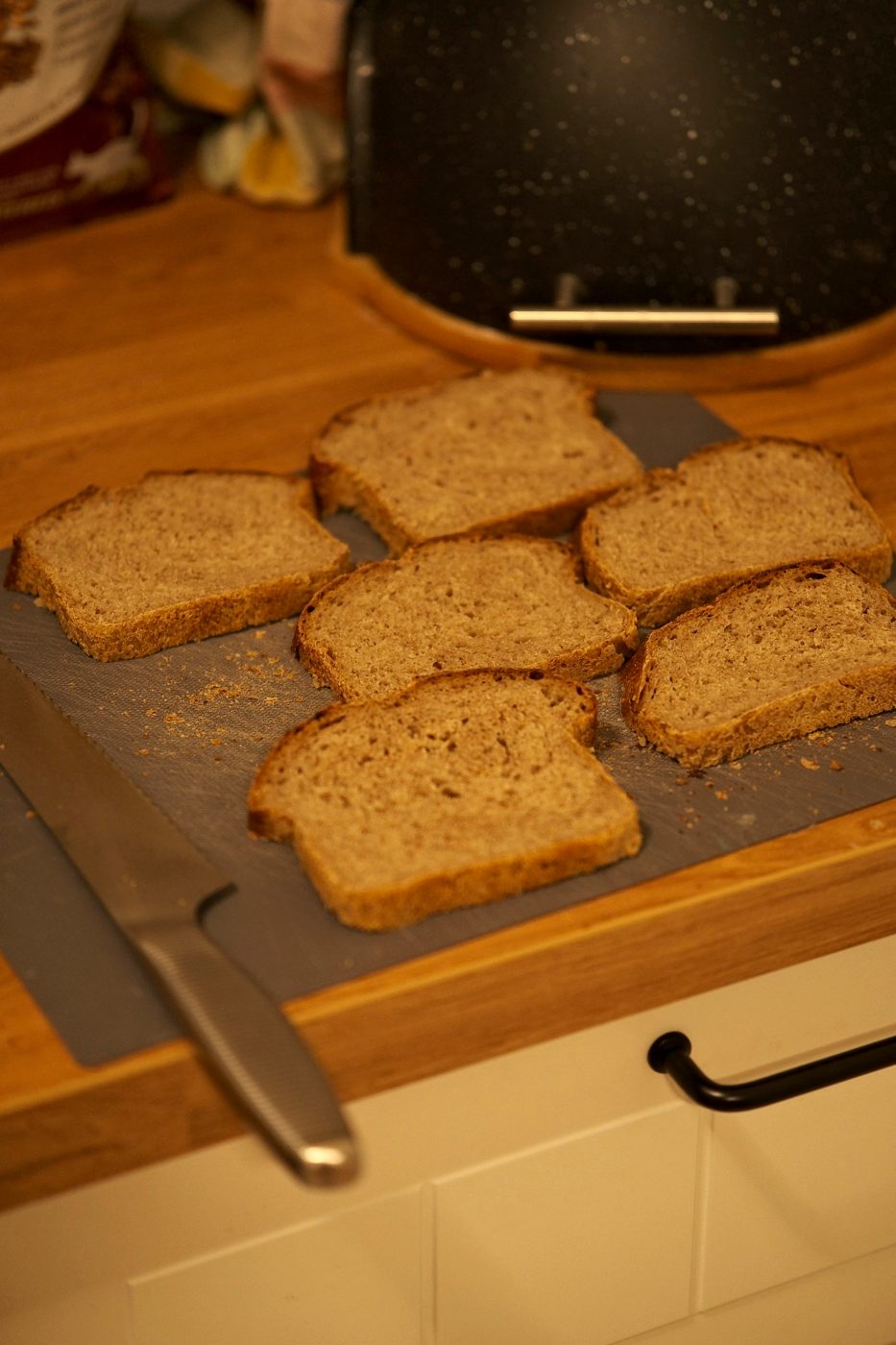
and… here it is
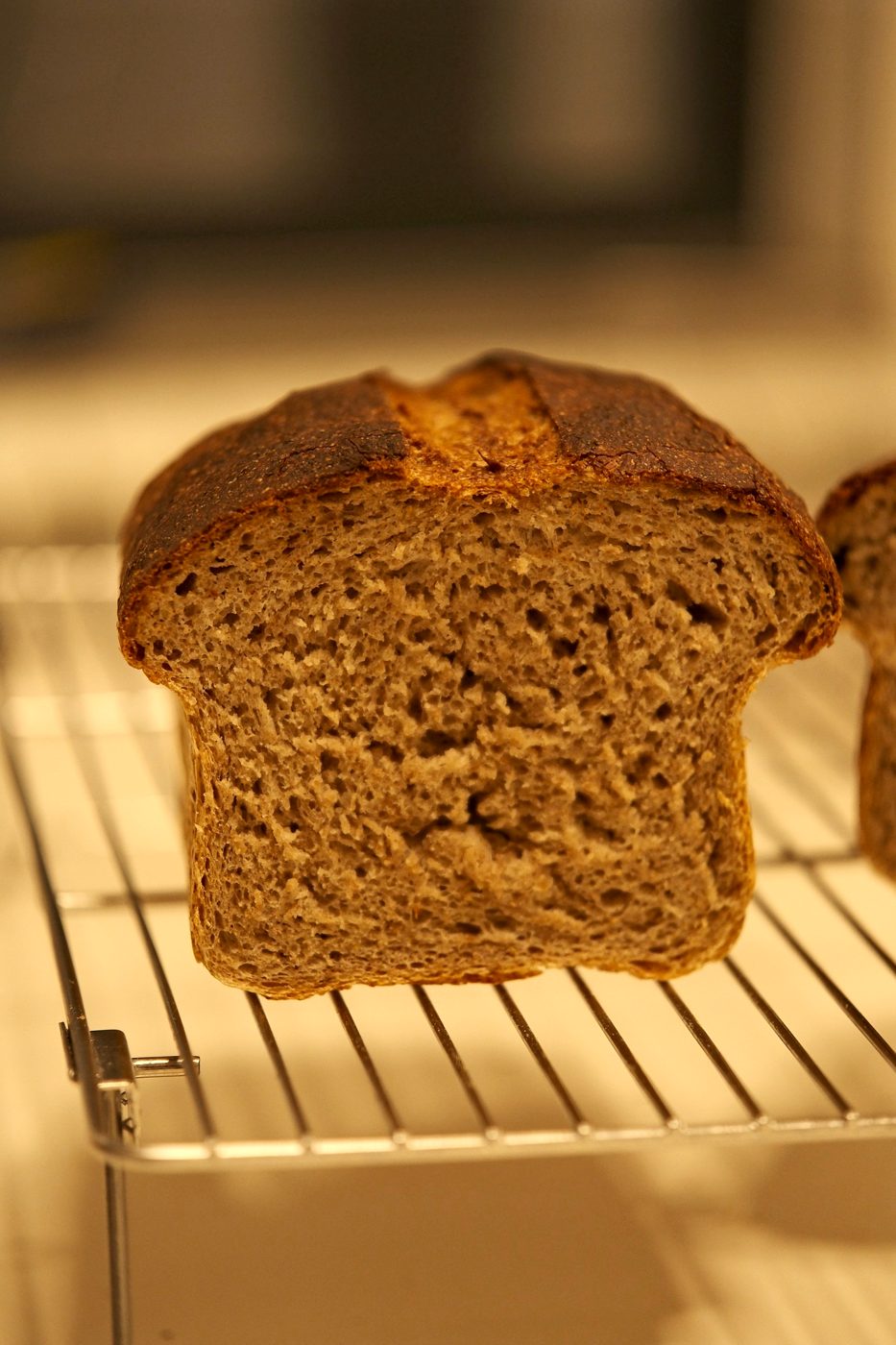
The taste is rich, slightly salty, with a light sourness from the rye flour and an excellent crust. Note that because of the large amount of whole-grain flour, the crust comes out darker than on white bread — that's normal!